Artist Teacher
Philosophy of teaching
-
I believe learning is most powerful when students feel safe to explore, confident enough to experiment, and supported to succeed in their own way.
-
I embrace the idea that “creativity is intelligence having fun.” When students play with ideas, they are not only being creative; they are also thinking deeply and critically.
-
My role as a teacher is to create meaningful, hands-on learning experiences that help every student feel capable, included, and appropriately challenged.
-
I design inclusive lessons from the outset using clear structures, visual supports, step-by-step demonstrations, and flexible ways for students to express their understanding.
-
I view differentiation as providing multiple pathways towards the learning goal, rather than lowering expectations.
-
I build inclusion through trust, consistent routines, and a classroom culture in which every student feels respected, seen, and heard.
-
I recognise students’ identities, languages, cultures, and lived experiences as valuable sources of knowledge and creativity.
-
I encourage students to connect their learning with their own lives and communities, helping them feel that education is something in which they belong.
-
I design lessons that pique curiosity, invite inquiry, and encourage students to ask questions, take creative risks, and explore how and why things work.
-
I value the learning process as much as the final outcome. Students are encouraged to explore possibilities, test ideas, reflect, revise, and persist.
-
Through creative and practical activities, I help students develop transferable skills such as problem-solving, decision-making, communication, collaboration, and independence.
-
Ultimately, I see teaching as a balance between care and challenge. By nurturing curiosity, valuing diversity, and supporting every learner, creativity becomes more than an artistic activity; it becomes a way for students to think, express themselves, and thrive.
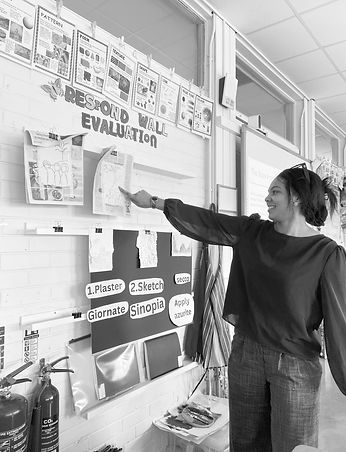
Utilising simple visual aids and evaluation wall for assessing success in a positive environment.

Hands on activities to gauge the learning in an inclusive way.

Offering digital literacy for students during lunch time clinic.